
Table of Contents
- Leaf Spring Suspension Essentials for RV Trailers
- Basics of Leaf Spring Suspension
- Exploring Leaf Spring Suspension in Depth
- Practical Guide to Leaf Spring Maintenance
- Advanced Techniques for Leaf Spring Suspension
- Frequently Asked Questions on Leaf Spring Suspension
- Optimizing RV Trailers with Leaf Spring Suspension
Leaf Spring Suspension Essentials for RV Trailers
Leaf spring suspension is a foundational system for RV trailers, consisting of multiple layers of curved steel leaves that flex to support weight and absorb road shocks. At Axle Inc., we see this setup as essential for maintaining stability during travel. The key components include the main leaf, which bears the primary load; helper leaves that add support for heavier capacities; the center bolt, securing the stack; and U-bolts, which clamp the assembly to the axle for precise alignment.
In RV trailer suspension contexts, the leaf spring system distributes loads evenly, enhancing ride comfort on uneven terrain. According to an educational overview from Universal Technical Institute, these suspensions excel in shock absorption and stability for heavy-duty applications. We offer a variety of trailer leaf springs in our internal product catalog, with options like 4- to 6-leaf configurations for 3,500- to 7,500-pound axles, ensuring durability under demanding conditions. Benefits include cost-effectiveness over pricier alternatives and straightforward maintenance, such as inspecting for sagging or cracking leaves and lubricating shackles regularly to prevent wear.
Compared to torsion axle suspension, leaf springs provide superior load-handling for variable weights common in RVs, making them a staple choice. While torsion systems offer a smoother ride in some cases, leaf springs’ robustness suits most trailer needs. We’re committed to delivering parts you can count on—backed by quality—for your RV adventures in Elkhart, IN.
Basics of Leaf Spring Suspension
One of the most traditional and reliable options in trailer suspensions is leaf spring suspension. At Axle Inc., we often recommend this system for its proven performance in handling heavy loads on various terrains. Leaf spring suspension consists of multiple layers of curved steel leaves that support the vehicle’s weight and absorb road shocks effectively. This setup is particularly common in RV trailers and trucks, where durability under stress is essential.
The core components of a leaf spring system include the main leaf, which is the longest and handles the primary load, along with shorter side leaves that provide progressive support as the suspension compresses. Clips secure the leaves together, while bushings at the ends allow for smooth articulation and reduce friction. According to educational insights from Universal Technical Institute, these elements work in tandem to maintain stability and even tire contact with the road. In the working mechanism, as weight is applied—such as when loading an RV trailer—the leaves gradually flatten, distributing the load evenly and flexing to dampen vibrations from bumps. For instance, a 5 leaf trailer spring 3000 lb provides robust support for standard axles, as practical product examples from Axle Inc. demonstrate with dimensions like 25-1/4 x 1-3/4 inches.
This leaf spring setup suits heavy-duty RV trailer suspension applications because it excels at shock absorption over uneven surfaces, ensuring a smoother ride for recreational vehicles. We see it frequently in setups for 3000 lb axles, where the progressive nature of the leaves prevents bottoming out under full load.
Leaf spring suspension offers several advantages, including high load capacity ideal for demanding uses and affordability in initial setup. However, it requires more maintenance, such as periodic inspections for rust on the steel components and lubrication of bushings. Disadvantages include potential for squeaking if not properly maintained, though these can be mitigated with regular care.
To illustrate key differences, the following table provides a basic comparison between leaf spring and torsion axle suspension for RV trailers:
Leaf Spring vs. Torsion Axle Suspension Overview
A basic comparison table highlighting key differences between leaf spring and torsion axle suspensions for RV trailers.
| Aspect | Leaf Spring Suspension | Torsion Axle Suspension |
|---|---|---|
| Load Capacity | High for heavy loads; uses multiple steel leaves. | Consistent torque; better for uneven terrain. |
| Maintenance | Requires periodic inspection and lubrication. | Lower maintenance; rubber components may degrade. |
| Cost | More affordable initial setup. | Higher upfront but durable. |
Data drawn from SAE standards and trailer industry practices, as referenced by SAE International for suspension safety and performance guidelines. Leaf spring suspension stands out for cost-effective heavy hauling in RV trailer suspension scenarios, while torsion axle suspension may appeal for smoother rides on rough paths with less upkeep. For those considering implementation in Elkhart, IN, the next section covers selection criteria to match your trailer’s needs.
Exploring Leaf Spring Suspension in Depth
Building on the fundamentals, let’s dive deeper into leaf spring suspension specifics for RV trailers. At Axle Inc., we specialize in these systems, offering sales, installation, and repairs tailored to ensure reliable performance on the road. This exploration covers common challenges, key differences from alternatives, and why leaf springs shine in tough conditions.
Common Issues and Troubleshooting
Leaf spring suspension systems in RV trailers can face wear from heavy loads and environmental factors, leading to reduced performance if not addressed promptly. Sagging occurs due to fatigue resistance breakdown in the leaves under prolonged weight, causing the trailer to sit lower and affect handling. Cracking develops from metal stress during cold weather expansions, while broken shackles result in misalignment that compromises stability. These issues are common in rv trailer suspension setups used for long-haul towing.
RV trailer owners can diagnose problems through straightforward steps recommended by the Federal Motor Carrier Safety Administration for suspension safety and compliance. Begin with a visual inspection for wear patterns, such as flattened or separated leaves indicating overload stress. Next, perform load testing by jacking up the trailer and measuring deflection under simulated weight to check for excessive bounce. Finally, measure ride height from the frame to the axle centerline, aiming for manufacturer specs to identify sagging early. According to Federal Motor Carrier Safety Administration guidelines, regular checks like these prevent accidents and extend system life. If issues arise, our experienced technicians in Elkhart, IN, provide thorough inspections and repairs to restore your setup.
Differences Between Leaf and Torsion Systems
Leaf spring mechanics rely on layered steel leaves that flex to provide progressive support, directly connecting to the axle for load distribution in heavy-duty applications. In contrast, torsion axle suspension uses rubber cords that twist within the axle tube, enabling independent wheel movement for a smoother response to uneven surfaces. As outlined in Society of Automotive Engineers standards for suspension design and evaluation, these differences impact everything from ride quality to maintenance.
Similar to other truck suspension systems, leaf springs offer pros like cost-effectiveness and easy replacement of individual parts, though they can produce noise over bumps due to metal-on-metal contact. Torsion systems provide a quieter, more comfortable ride with better isolation from road imperfections but come with cons such as higher upfront costs and complexity in repairs. Leaf springs suit budget-conscious heavy-duty RV hauling where durability matters most, while torsion excels in lightweight travel trailers prioritizing comfort over rugged loads.
The following table compares key performance metrics for these systems in RV applications, based on FMCSA guidelines and SAE standards:
| Metric | Leaf Spring | Torsion Axle |
|---|---|---|
| Durability on Rough Roads | Good absorption via multi-leaf design; prone to fatigue. | Excellent independent wheel movement; less wear. |
| Repair Costs | Lower; individual leaves replaceable. | Higher; full axle often needed. |
| Installation Complexity | Straightforward with standard tools. | Requires precise alignment. |
Leaf springs generally edge out in affordability for repairs, making them practical for frequent off-road use, while torsion’s independent design reduces overall wear but demands more investment upfront. Fire Apparatus Manufacturers’ Association educational content on suspension technologies highlights how these trade-offs influence choices for demanding vehicles. Understanding these distinctions helps RV owners select the right system for their towing needs, aligning with our commitment to quality trailer axle service at Axle Inc.
Beyond these issues, understanding differences from alternatives like torsion systems reveals key choices for trailer owners.
Advantages for Rough Road Travel
Leaf spring suspension demonstrates resilience through its multi-leaf design, which absorbs shocks from potholes and gravel by distributing forces progressively to prevent bottoming out. This setup maintains trailer stability during RV towing on off-highway routes, where sudden jolts could otherwise lead to sway or damage. The progressive stiffening—where additional leaves engage under heavier loads—enhances control without sacrificing ride height, making it ideal for varied terrains like mud or uneven paths.
In performance details, leaf springs handle dynamic loads better than some alternatives, with the steel layers providing consistent support even after extended exposure to vibration. Society of Automotive Engineers specifications underscore their fatigue resistance metrics, ensuring longevity in high-stress scenarios. For instance, during a 500-mile trip on forest service roads, a properly maintained leaf spring setup kept an RV trailer level, avoiding the common pitfalls of softer systems that might compress excessively.
Real-world RV towing examples illustrate this edge: owners navigating gravel backroads to campsites report minimal fatigue in the leaves, even with added cargo weights up to the axle’s capacity. Compared to smoother but less rugged options, leaf springs excel in preventing misalignment on washboard surfaces, as Federal Motor Carrier Safety Administration protocols emphasize for safe commercial operations. At Axle Inc., we’ve seen these systems endure seasonal hauls in Indiana’s varied weather, reinforcing their value for adventurers. These distinctions highlight why leaf springs excel in demanding scenarios, such as rough road travel, setting the stage for ongoing maintenance strategies.
Practical Guide to Leaf Spring Maintenance
At Axle Inc., we understand the critical role that a reliable leaf spring suspension plays in ensuring safe and smooth towing for RV owners. As trailers endure heavy loads and rough roads, the rv trailer suspension demands regular attention to prevent failures that could compromise stability. This guide equips you with practical steps for maintenance, replacement, and upgrades, drawing on our expertise in Elkhart, IN, to help extend the life of your setup.
Step-by-Step Replacement Process
Replacing worn leaf springs is a key task for maintaining your trailer’s integrity, especially when sagging or cracking appears after years of use. We recommend starting only if you have the right tools and experience, as improper handling can lead to accidents. First, park the trailer on a level surface and chock the wheels securely to prevent rolling.
Next, jack up the trailer using rated hydraulic jacks placed under the frame near the axle—never under the axle itself—to lift it safely about 12 inches. Support it with jack stands rated for the trailer’s weight. Remove the old leaf spring by loosening the U-bolts with a socket wrench, then unbolt the shackles and hangers. Inspect the equalizer and bushings for wear during disassembly. For replacement, select a compatible part like the 5 leaf trailer double eye spring matched to your 3000 lb axles, as detailed in Axle Inc. product specifications from our manufacturer’s catalog. Position the new spring, aligning the eyes with shackles, and torque all bolts to 45-55 ft-lbs using a calibrated torque wrench. Reinstall U-bolts and lower the trailer gradually.
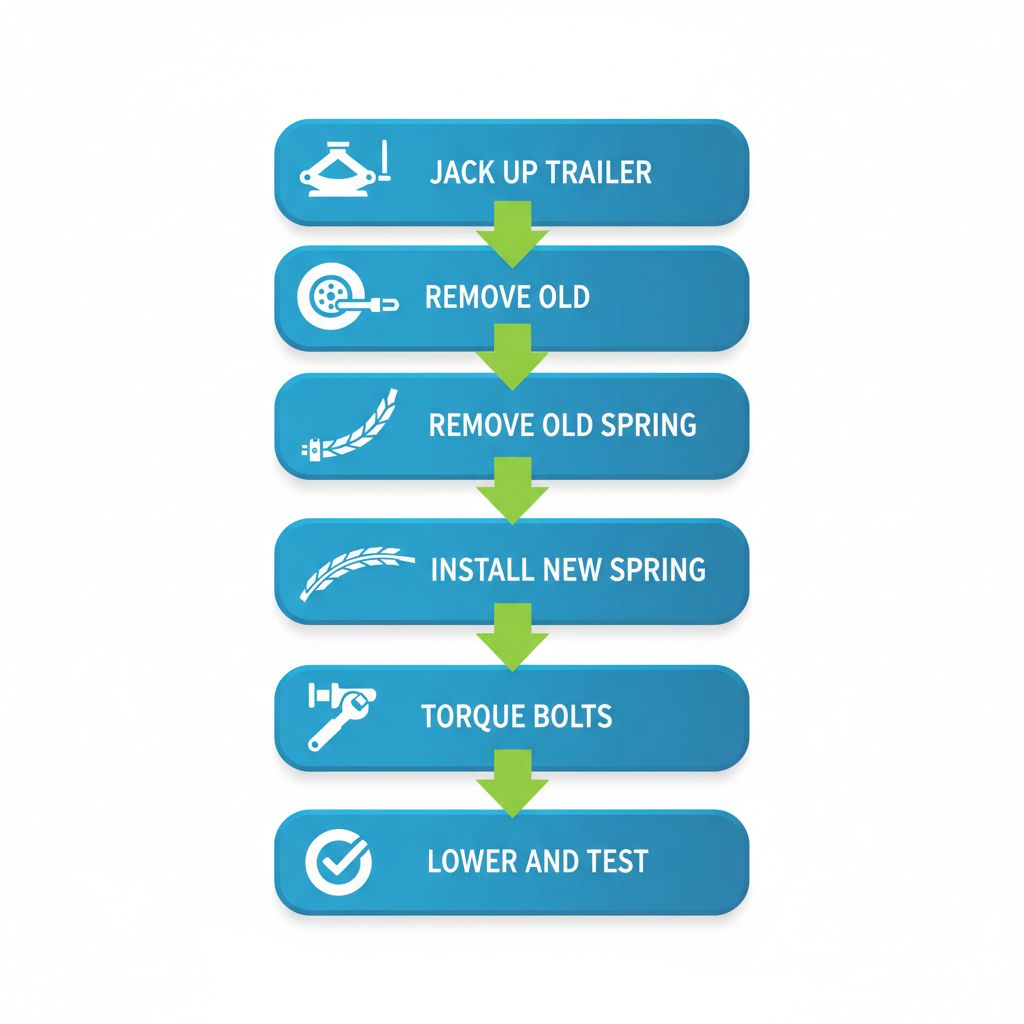
Step-by-step guide to RV trailer leaf spring replacement
Safety is paramount: wear gloves and eye protection, work in pairs if possible, and double-check all connections before towing. If unsure, our technicians in Elkhart can handle the job with precision.
Understanding the costs involved can help you decide between DIY efforts and professional service. The following table outlines typical expenses for common leaf spring tasks, based on our inventory and standard labor rates at Axle Inc.
| Task | DIY Cost | Professional Cost (Axle Inc.) |
|---|---|---|
| Bearing Repack | $50-100 | $150-250 |
| Spring Replacement | $200-400 | $500-800 |
| Full Upgrade | $500+ | $1000+ with installation |
Estimates based on Axle Inc. inventory and standard labor rates.
These figures highlight how professional services save time and reduce risks, particularly for complex replacements where our 60+ years of combined technician experience ensures compliance with industry standards. Once replaced, shifting focus to preventive care will maximize your investment.
Maintenance Routines and Inspections
Regular upkeep of your leaf spring suspension is essential to avoid costly breakdowns and ensure safe towing. We advise RV owners to incorporate simple routines that catch issues early, promoting longevity in demanding conditions like highway travel or off-road camping.
Begin with monthly visual inspections: Look for cracks, excessive rust, or sagging in the leaves by placing the trailer on a flat surface and measuring ride height from the frame to the ground. Check shackles and bushings for play or wear. Quarterly, lubricate bushings with marine-grade grease using a grease gun on zerk fittings to reduce friction and prevent seizing—apply until it purges from the ends.
Annually, perform alignment adjustments per SAE J510 standard guidelines from SAE International, using a torque wrench to verify even load distribution across the axle. Document all findings with photos and notes to support warranty claims. At Axle Inc., we’re committed to delivering parts you can count on—backed by quality for these essential checks.
Upgrading Your RV Trailer Suspension
When standard leaf springs no longer suffice for heavier loads or rough terrain, upgrading enhances performance and safety. We guide owners in selecting options that align with their towing needs, such as switching to a torsion axle suspension for smoother rides, though leaf systems remain robust for many applications.
Start by assessing your trailer’s weight and usage: Opt for heavier gauge 6-leaf double eye springs, detailed as upgrade components from Axle Inc. inventory, ensuring compatibility with 3000 lb axles and 25 1/4 x 1 3/4 inch dimensions. Verify fit with existing hangers and equalizers to avoid modifications.
Installation mirrors replacement but may require professional help if welding is involved—our Elkhart team offers axle installation for seamless integration. Benefits include reduced bounce, better highway stability, and increased payload capacity, making long trips more comfortable. Trusted Brand. Proven Quality. Contact us to explore these enhancements today.
Advanced Techniques for Leaf Spring Suspension
Building on foundational setups, advanced techniques for leaf spring suspension elevate performance in trailers and trucks. At Axle Inc. in Elkhart, IN, we specialize in these enhancements to handle heavier loads and rougher terrains. Multi-leaf configurations and upgrades like torsion axles improve durability and ride quality. We integrate safety standards to ensure reliable operation. These methods address common challenges in RV and cargo applications, providing smoother handling and longer service life.
Multi-leaf spring systems, such as our 6-leaf double-eye springs, distribute loads more evenly than basic setups. According to proprietary product specifications from Axle Inc., these springs measure 25-1/4 x 1-3/4 inches and suit 3000 lb axles perfectly. They reduce stress on individual leaves, minimizing fatigue in high-demand scenarios. For fleet operators, adding helper springs or adjusting arc heights optimizes capacity. In RV trailer suspension, this setup supports up to 3000 pounds without sagging, enhancing stability on highways.
Consider torsion axle suspension as a premium upgrade from traditional leaf springs. Educational insights from Universal Technical Institute highlight its smoother ride quality and lower maintenance needs, ideal for RV trailers. Torsion-based trailer axles twist to absorb shocks, eliminating leaf wear and noise. We recommend this switch for frequent haulers seeking reduced vibrations. Installation involves precise alignment to maintain even weight distribution, often yielding 20-30% better comfort over leaf spring setups.
Adhering to safety standards prevents failures in advanced modifications. The SAE organization logo represents J510 guidelines, ensuring reliable electrical connectors in suspension wiring for trailers. Diagnostic methods include visual inspections for cracks and torque checks on double-eye designs. Universal Technical Institute notes signs like uneven tire wear or bumpy rides indicate fatigue. We perform these checks during service to catch issues early, promoting longevity.
Integrating these techniques into broader vehicle modifications boosts overall efficiency. At Axle Inc., we guide DIY mechanics and fleets toward optimal setups, combining leaf spring suspension advances with our expertise in custom axles and repairs for safer travels.
Frequently Asked Questions on Leaf Spring Suspension
Building on leaf spring fundamentals, we address common queries to help RV and trailer owners in Elkhart, IN, understand this reliable system.
What is leaf spring suspension and how does it work?
Leaf spring suspension consists of layered steel strips, or multi-leaf packs, that flex to absorb road shocks while distributing loads evenly across axles. At Axle Inc., our catalog offers options from 3,500 to 7,500 lb capacities for durable performance.
How does leaf spring suspension benefit RV trailer suspension?
In RV trailer suspension, leaf springs provide stability for heavy loads, ensuring smooth towing on highways. Their simple design reduces vibrations, enhancing safety and comfort for long trips with campers or gear.
What are the differences between leaf spring suspension and torsion axle suspension?
Leaf spring suspension uses stacked leaves for progressive support, ideal for cost-effective, rugged use. Torsion axle suspension relies on rubber rods twisting for independent wheel action, offering quieter rides but higher initial costs in RV applications.
How can I maintain leaf spring suspension?
Inspect regularly for cracks in leaves, sagging under load, or worn shackles. Lubricate bushings annually and check U-bolts for tightness. At Axle Inc., we recommend professional tune-ups to prevent failures during towing.
When might air ride suspensions be a better alternative to leaf spring suspension?
Consider air ride suspensions for superior ride quality in frequent heavy-duty use, as FAMA insights note their vibration reduction and stability matching leaf systems, though at higher costs.
Are leaf springs suitable for heavy-duty towing?
Yes, our Axle Inc. multi-leaf springs handle up to 7,500 lbs reliably, distributing weight to prevent sagging. Pair with proper axle ratings for safe, stable hauls in demanding conditions.
For detailed care, see the following guide.
Optimizing RV Trailers with Leaf Spring Suspension
Leaf spring suspension offers reliable support for RV trailers, providing durability and load distribution essential for safe towing. At Axle Inc., we recommend selecting multi-leaf packs rated for 3,500 to 7,000 pounds based on your trailer’s weight capacity, as detailed in our authoritative product catalog.
To optimize your rv trailer suspension, lubricate shackles and hangers every 5,000 miles to prevent binding. Upgrade to progressive rate leaf springs for smoother rides on uneven terrain. For sagging due to overload, add helper springs temporarily—consult professionals for heavy modifications.
Compared to torsion axle suspension, leaf spring setups enhance stability in RV towing scenarios, like hauling through Elkhart’s varied roads, integrating seamlessly with axles for overall performance.
This article was researched and written with the assistance of AI tools.
Resources
- Browse In-Stock Trailer Leaf Springs for 3,500-7,500 lb Axles
- Select 5-Leaf Trailer Spring for Reliable 3,000 lb Axle Support
- Choose 5-Leaf Double Eye Spring for 3,000 lb Trailer Axles
- Install 5-Leaf Trailer Suspension Spring for Optimal 3,000 lb Performance
- Upgrade to 6-Leaf Trailer Spring for Enhanced 3,000 lb Durability
- Purchase Superior 6-Leaf Spring for 3,000 lb Trailer Load Support
- Fit Robust 6-Leaf Double Eye Spring for 3,000 lb Axle Suspension
- Learn Truck Suspension Systems Maintenance for Stability and Comfort
- Access J510 Standards for Suspension Design and Evaluation
- Discover Air-Ride Suspension Benefits for Trucking Ride Quality
- Comply with FMCSA Safety Regulations for Motor Carrier Operations
- Access J1123 Standards for Professional Suspension Credibility